This guide helps you understand the signs. It cannot diagnose your property, and more than one cause may be present.
Look for a pattern
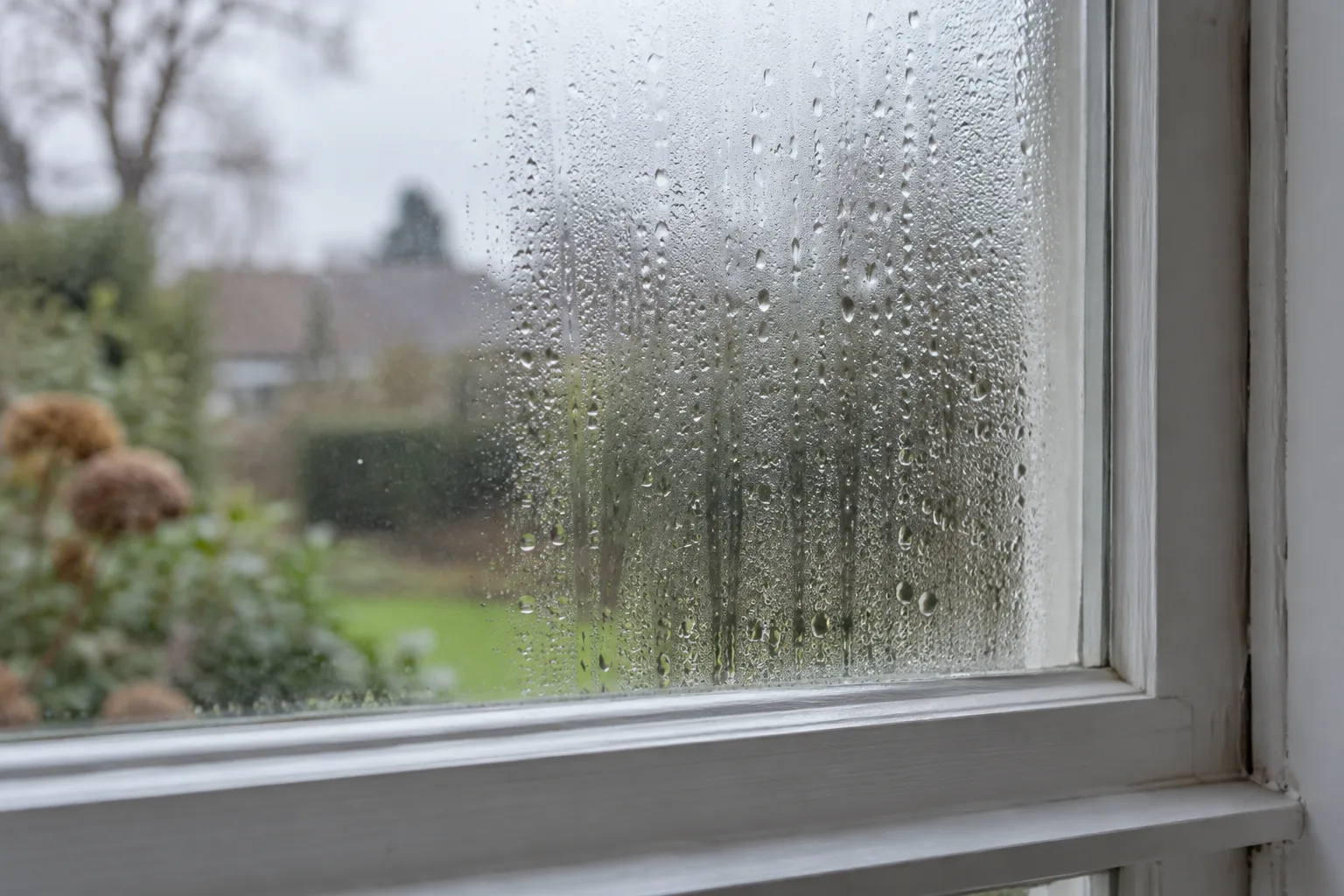
Moisture that appears on cold mornings, after showers or while cooking may be condensation. Check whether it collects around windows or in corners where air does not move easily.
These are clues rather than a diagnosis. A cold wall can become damp for several reasons, and mould does not identify the source of the water.
Simple changes you can check safely
- Use working extractor fans when cooking and bathing. Keep the home’s intended ventilation openings clear.
- Where practical, leave a gap behind furniture against external walls so air can circulate.
- Avoid drying washing indoors without adequate ventilation. Keep a record of changes rather than assuming the problem has gone.
Ventilation is part of the picture. Building defects, insulation, heating and the source of the moisture all matter. A recurring problem should not simply be blamed on how someone lives.
When it needs a closer look
An isolated patch that stays wet, grows in dry weather or changes after using plumbing deserves further investigation. Rain-related changes may point to water entering from outside.
Address damp and mould promptly; you do not need to wait for it to return. Ask an appropriately experienced professional to assess a persistent or unclear source. If you rent, tell your landlord or letting agent promptly and keep a dated record.
Can condensation and a leak happen together?
Yes. One cause does not rule out another. Tell the person investigating about every sign you have noticed, including water use, weather patterns and where mould appears.
Further reading
The image is illustrative, not a photograph of a diagnosed property. Sources inform this general guide; their inclusion does not imply endorsement.
Not sure where to start?
Work through the signs you’ve noticed and get a useful next step.
Check my symptoms